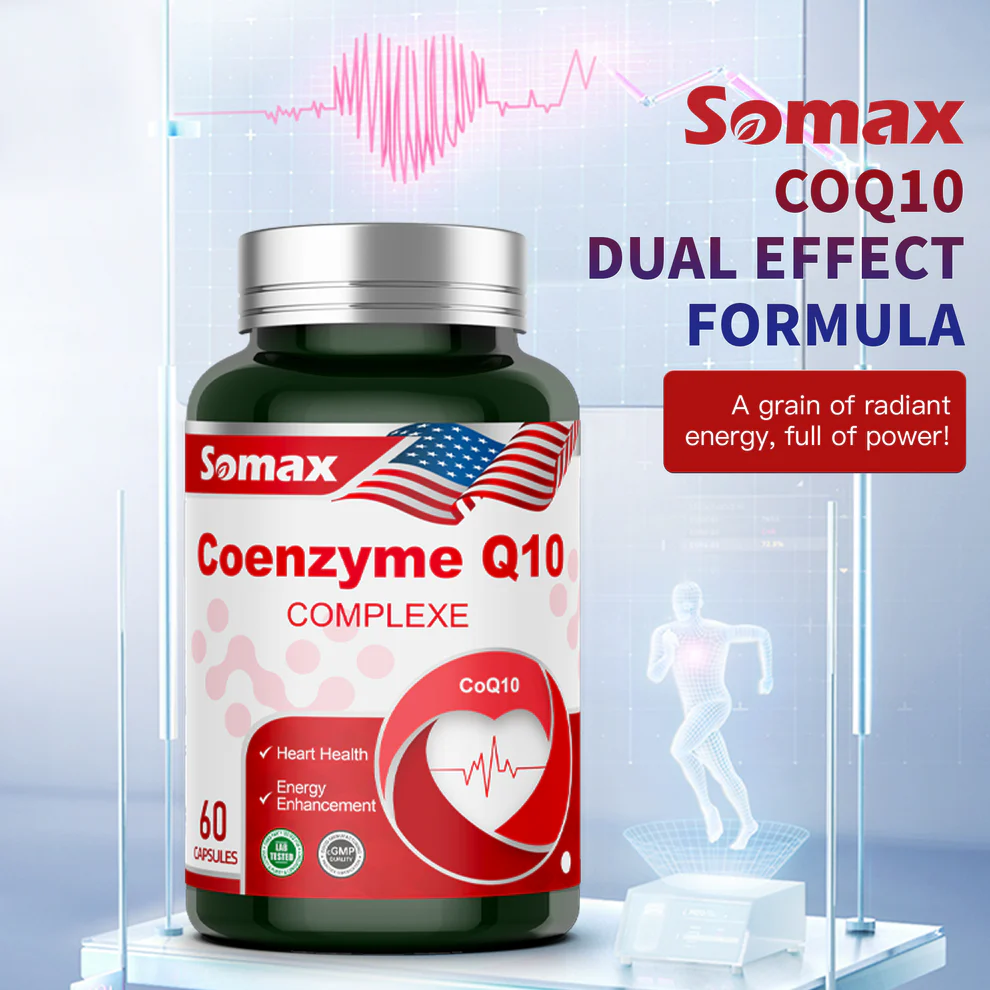
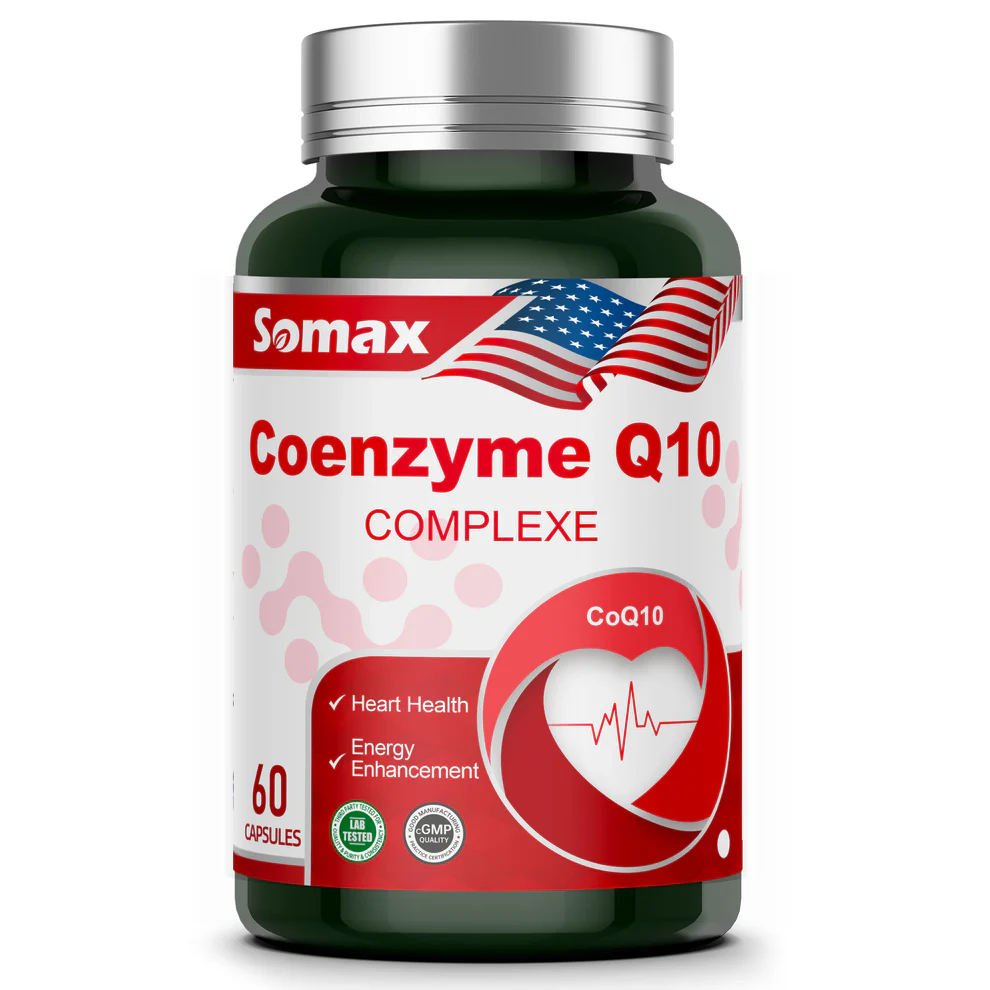
In cardiovascular nutrition research, one substance has been tracked and studied by scientists for over half a century — it exists in every cell of your body, yet quietly diminishes just when you need it most. It's Coenzyme Q10 (CoQ10), a nutrient with a unique and profound impact on heart health. Whether you're a health-conscious individual focused on cardiovascular prevention, or a patient currently taking statin medications, understanding the science behind CoQ10 could open an entirely new door in your health management journey.
The heart is the organ most dependent on CoQ10, with mitochondrial density far exceeding all other tissues
1. Understanding CoQ10: The Core Engine of Cellular Energy
Coenzyme Q10, chemically known as 2,3-dimethoxy-5-methyl-6-decaprenyl benzoquinone, derives its "Q10" name from the 10 isoprenoid units in its molecular structure. In biochemistry, it goes by two more familiar names: Ubiquinone and Ubiquinol — representing its oxidized and reduced forms, respectively.
"Ubiquinone" comes from the Latin "ubique" (everywhere), a name that precisely reflects its distribution: CoQ10 exists in virtually all tissues and organs of the human body. However, being "everywhere" doesn't mean "evenly distributed" — high-energy organs like the heart, liver, kidneys, and muscles contain far higher concentrations of CoQ10 than other tissues.
🔬 How CoQ10 Works in Mitochondria
On the inner membrane of each cell's mitochondria lies a precisely orchestrated "Electron Transport Chain" (ETC). This chain, composed of four protein complexes (Complex I-IV), is responsible for converting chemical energy from food into the cell's directly usable energy currency — ATP (Adenosine Triphosphate).
CoQ10 plays an irreplaceable role in this process: it is the sole mobile carrier that shuttles electrons from Complex I and Complex II to Complex III. Without CoQ10, the electron transport chain would "break" at this critical junction, causing ATP synthesis efficiency to plummet dramatically. The human body needs to synthesize approximately 40-70 kg of ATP daily to maintain normal functions — and all of this depends on CoQ10's shuttle transport.
Electron Shuttle
Travels back and forth along the inner mitochondrial membrane, transferring electrons from Complex I/II to Complex III, driving ATP synthesis
Lipid Antioxidant
Protects lipids in cell membranes and mitochondrial membranes from free radical oxidative damage, maintaining membrane fluidity and integrity
Vitamin E Regenerator
Capable of reducing oxidized Vitamin E back to its active form, extending the effectiveness of the antioxidant defense chain
Anti-Inflammatory Modulator
Reduces pro-inflammatory cytokine expression by suppressing the NF-kB signaling pathway, alleviating chronic low-grade inflammation
2. The Heart: The Organ Most Dependent on CoQ10
The heart is an engine that never stops — from the moment you're born, it beats at a rate of 60-100 times per minute without interruption, approximately 100,000 times per day, and over 35 million times per year. To sustain such relentless, high-intensity work, cardiac muscle cells have an staggering demand for energy.
Research shows that mitochondria account for 35-40% of cardiac muscle cell volume — a proportion far exceeding skeletal muscle (approximately 5-8%) and most other tissues. This means the heart's demand for ATP is extraordinarily high, and as the core cofactor for ATP synthesis, CoQ10 concentration in cardiac tissue reaches its highest level accordingly.
Precisely because of the heart's extreme dependence on CoQ10, when the body's CoQ10 levels decline, the heart is often the first organ affected. Multiple studies have found that CoQ10 concentrations in heart failure patients' cardiac tissue are 25-75% lower than in healthy individuals, with CoQ10 levels showing a significant inverse correlation with heart failure severity.
💡 Key Understanding
The heart is not only the organ with the highest CoQ10 concentration, but also the most vulnerable organ when CoQ10 is depleted. Understanding this point is the foundation for appreciating CoQ10's cardiac protective value. This isn't a vague "wellness concept" — it's a scientific fact built on solid bioenergetic principles.
3. CoQ10 Decline with Age: An Irreversible Curve
The human body can synthesize CoQ10 on its own, primarily in the liver through the Mevalonate pathway. This synthesis pathway also serves as the common pathway for cholesterol production — a fact that becomes critically important when we discuss statin medications later.
Research data shows that the body's CoQ10 synthesis capacity peaks around age 20-25, then begins declining year by year. By age 40, cardiac CoQ10 content has already fallen approximately 32% from its peak; by 60, this decline can reach 52%; and by 80, cardiac CoQ10 levels may be only 43% of their peak value.
This declining curve carries several important implications. First, CoQ10 loss doesn't happen suddenly — it's a gradual process, and early symptoms are often subtle. You might simply notice you "tire more easily" or "recover more slowly." Second, this decline stems from reduced endogenous synthesis capacity, which is difficult to compensate through diet alone: daily dietary CoQ10 intake typically amounts to only 3-6 mg, while maintaining optimal plasma levels may require 100-200 mg of supplementation.
4. Statin Medications: A Double-Edged Sword
Statin medications are among the most widely prescribed cardiovascular drugs globally, with approximately 40 million Americans currently taking them. They work by inhibiting HMG-CoA reductase to reduce cholesterol synthesis — an effect that is well-documented and supported by extensive clinical evidence. However, a frequently overlooked fact is that CoQ10 and cholesterol share the same biosynthesis pathway.
Extensive laboratory and clinical research has revealed statins' inhibitory effect on CoQ10 synthesis alongside their cholesterol-lowering action
When statins block HMG-CoA reductase, they don't just reduce cholesterol synthesis — they simultaneously block CoQ10 synthesis downstream of the Mevalonate pathway. Research shows that statin use can reduce plasma CoQ10 levels by 20-40%, with certain high-dose regimens causing reductions of up to 50%.
| Statin Effect | Impact on Cholesterol | Impact on CoQ10 |
|---|---|---|
| Low-dose statin | LDL reduced 20-30% | CoQ10 reduced 20-25% |
| Moderate-dose statin | LDL reduced 30-50% | CoQ10 reduced 25-35% |
| High-dose statin | LDL reduced 50%+ | CoQ10 reduced 35-50% |
| Common side effects | — | Myalgia, fatigue, exercise intolerance |
This is a key reason why many statin users report muscle pain (myalgia), generalized fatigue, and exercise intolerance. The incidence of these symptoms ranges from 10% to 30% across different studies, significantly impacting medication adherence.
⚠ Important Note
If you're taking statin medications and experiencing muscle pain or persistent fatigue, this may not simply be a "normal side effect." Discussing CoQ10 level testing and supplementation with your doctor is a worthwhile consideration. Multiple clinical studies have shown that CoQ10 supplementation (typically 100-200mg/day) can significantly alleviate statin-associated myalgia. However, always consult a healthcare professional before adjusting your medication regimen.
5. Clinical Evidence: CoQ10's Cardioprotective Effects
CoQ10 is backed not only by solid biochemical mechanisms but also by multiple large-scale clinical trials that have validated its real-world cardiovascular benefits. Here are the most landmark studies:
The Q-SYMBIO Trial: A Breakthrough in Heart Failure Management
Published in 2014 in JACC: Heart Failure, the Q-SYMBIO trial is the most important randomized controlled trial of CoQ10 in heart failure to date. This two-year, multicenter study enrolled 420 patients with moderate-to-severe heart failure (NYHA Class III-IV), randomly assigned to either a CoQ10 group (300mg ubiquinone daily) or a placebo group.
The results were remarkable: the CoQ10 group showed a 43% reduction in major adverse cardiovascular events (MACE), a 42% reduction in all-cause mortality, and significantly fewer cardiovascular-related hospitalizations. This was the first time a rigorous randomized controlled trial demonstrated that CoQ10 supplementation can improve long-term outcomes in heart failure patients — not merely alleviate symptoms.
Hypertension Meta-Analysis: Systematic Review of Blood Pressure Effects
A 2007 meta-analysis published in the Journal of Human Hypertension pooled data from 12 clinical trials involving 362 hypertensive patients. Results showed that CoQ10 supplementation (dosage range 60-200mg/day) reduced systolic blood pressure by an average of 11 mmHg and diastolic blood pressure by an average of 7 mmHg, with no significant adverse effects observed.
While this blood pressure reduction may seem modest, epidemiological studies show that every 10 mmHg reduction in systolic blood pressure reduces stroke risk by approximately 35% and coronary heart disease risk by approximately 25%. For patients with mild hypertension or as an adjunct to antihypertensive medications, CoQ10's value should not be overlooked.
- Improves cardiac energy metabolism — Enhances mitochondrial ATP synthesis efficiency, boosting cardiac contractile function and ejection fraction
- Protects vascular endothelial function — Reduces oxidized LDL formation, maintaining vascular elasticity and normal nitric oxide (NO) production
- Reduces myocardial oxidative stress — Scavenges free radicals in mitochondria and cell membranes, lowering oxidative damage to cardiac cells
- Suppresses chronic inflammation — Downregulates the NF-kB signaling pathway, reducing expression of pro-inflammatory cytokines TNF-alpha and IL-6
- Improves lipid profile — Some studies suggest CoQ10 may lower Lp(a) levels, an independent cardiovascular risk factor
6. Ubiquinol vs. Ubiquinone: How to Choose the Right Form of CoQ10
CoQ10 exists in two interconvertible forms within the body — Ubiquinone (oxidized form) and Ubiquinol (reduced form). Understanding the difference between these two forms is one of the most important pieces of knowledge when selecting a CoQ10 product.
| Comparison | Ubiquinone | Ubiquinol |
|---|---|---|
| Chemical State | Oxidized form | Reduced form (active form) |
| Proportion in Body | Approx. 5-10% | Approx. 90-95% |
| Bioavailability | Lower; must be converted to Ubiquinol first | Higher; directly utilized |
| Antioxidant Activity | Requires conversion before activation | Directly active as an antioxidant |
| Best Suited For | Younger, healthy individuals (strong conversion ability) | Over 40, cardiovascular concerns, statin users |
| Price | Lower | Higher (more complex manufacturing) |
| Stability | Stable; resistant to oxidation | More susceptible to oxidation; requires special packaging |
In human blood, approximately 90-95% of CoQ10 exists in the Ubiquinol form, meaning Ubiquinol is the primary active form through which CoQ10 functions in the body. Younger, healthy individuals typically have efficient Ubiquinone-to-Ubiquinol conversion ability, making the choice of form less critical. However, as we age (especially after 40), this conversion capacity gradually declines, and directly supplementing with Ubiquinol may offer better absorption rates and bioavailability.
✅ Selection Guide
Under 40, healthy individuals: Either form works well; Ubiquinone offers better value.
Over 40, cardiovascular concerns, or taking statins: Ubiquinol is recommended, or choose a complex formula containing Ubiquinol, to ensure higher bioavailability.
Regardless of form: Always take with a meal containing fats — CoQ10 is fat-soluble, and taking it with dietary fats can increase absorption by over 300%.
7. CoQ10's Multi-Dimensional Protection: Beyond Energy
While CoQ10 is best known for its role in ATP synthesis, modern research has revealed a far richer biological role than simply being an "energy cofactor." For the cardiovascular system, CoQ10 provides a multi-layered, multi-target protection mechanism.
Antioxidant Protection Layer
CoQ10 (especially in Ubiquinol form) is the only endogenously synthesized fat-soluble antioxidant capable of directly scavenging free radicals within cell membranes and lipoprotein particles. It has a significant inhibitory effect on oxidized LDL (ox-LDL) formation — and oxidized LDL is a key initiator of atherosclerosis. Studies show CoQ10 can reduce ox-LDL levels by 12-15%, slowing arterial plaque formation at its source.
Anti-Inflammatory Regulation Layer
Chronic low-grade inflammation is considered the "silent driver" of cardiovascular disease. CoQ10 exerts anti-inflammatory effects through multiple signaling pathways: suppressing NF-kB activity and reducing production of inflammatory markers including TNF-alpha, IL-6, and CRP. A meta-analysis of 17 randomized controlled trials found that CoQ10 supplementation reduced CRP by 0.35 mg/L, TNF-alpha by 0.45 pg/mL, and IL-6 by 1.61 pg/mL.
Mitochondrial Protection Layer
CoQ10 doesn't just work within mitochondria — it also protects the mitochondria themselves from damage. It reduces electron leakage during the electron transport chain process, thereby lowering superoxide free radical production within mitochondria and preserving mitochondrial DNA integrity. This "self-protection" mechanism is especially critical for maintaining long-term cardiac cell health — cardiac cells are virtually non-regenerative, and the health of their mitochondria directly determines the heart's functional lifespan.
Choosing a scientifically formulated CoQ10 supplement can better harness its multi-dimensional health protection benefits
8. Who Needs CoQ10 Supplementation Most?
While CoQ10 holds potential health value for virtually every adult, the following groups have the most pressing need:
- Adults over 40 — Endogenous CoQ10 synthesis has already declined significantly; external supplementation is especially needed to maintain cardiac energy supply
- Statin medication users — The drug's inhibition of CoQ10 synthesis makes supplementation a near-essential strategy
- Those with cardiovascular family history — Genetic factors mean the cardiovascular system may need additional nutritional support
- Those experiencing persistent fatigue or exercise intolerance — These may signal insufficient cellular energy metabolism
- Hypertensive patients — CoQ10's adjunctive blood pressure-lowering effects have been confirmed by meta-analysis
- Heart failure patients (under physician guidance) — Clinical trials like Q-SYMBIO support CoQ10 as an adjunctive heart failure management strategy
- High-intensity athletes — High-energy activities increase CoQ10 demand; supplementation may improve exercise performance and recovery
9. How to Supplement CoQ10 Scientifically
Now that you understand CoQ10's importance, here are evidence-based supplementation recommendations:
- Dosage selection — For general wellness: 100-200mg/day; for specific health needs (heart failure support, statin use), dosages of 200-300mg/day may be appropriate under physician guidance. The Q-SYMBIO trial used an effective dose of 300mg/day.
- Timing — Best taken with breakfast or lunch, alongside foods containing fats. Avoid large doses before bedtime, as CoQ10 may have mild energizing effects.
- Form selection — Healthy individuals under 40 can choose Ubiquinone; those over 40 or with cardiovascular concerns should consider Ubiquinol. When uncertain, opt for a complex formula containing Ubiquinol.
- Consistency — CoQ10's benefits typically become apparent after 4-12 weeks of consistent supplementation. The Q-SYMBIO trial's benefits were observed after two years of continuous use — long-term commitment is recommended.
- Synergistic formulation — Combining with Vitamin E, Selenium, and Omega-3 can enhance antioxidant effects. Complex formula products have a natural advantage in this regard.
🏆 Somax Coenzyme Q10 Complex
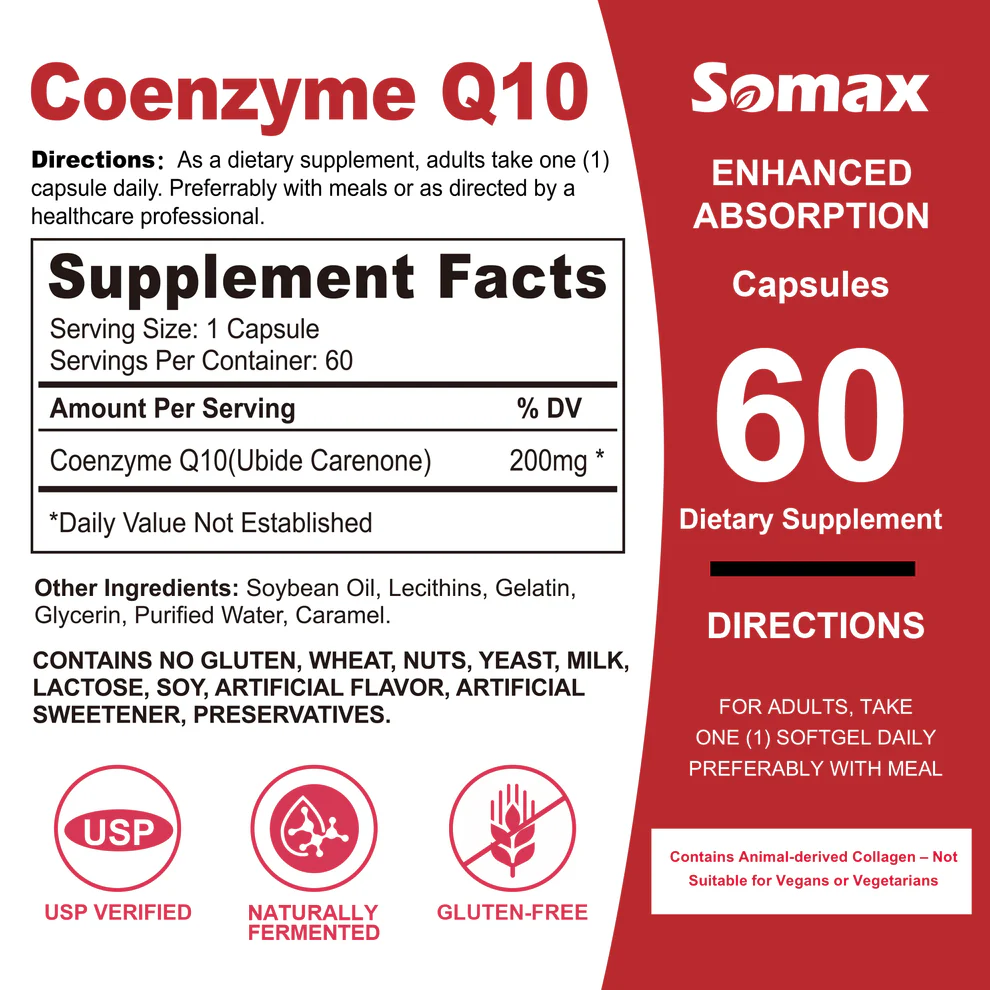
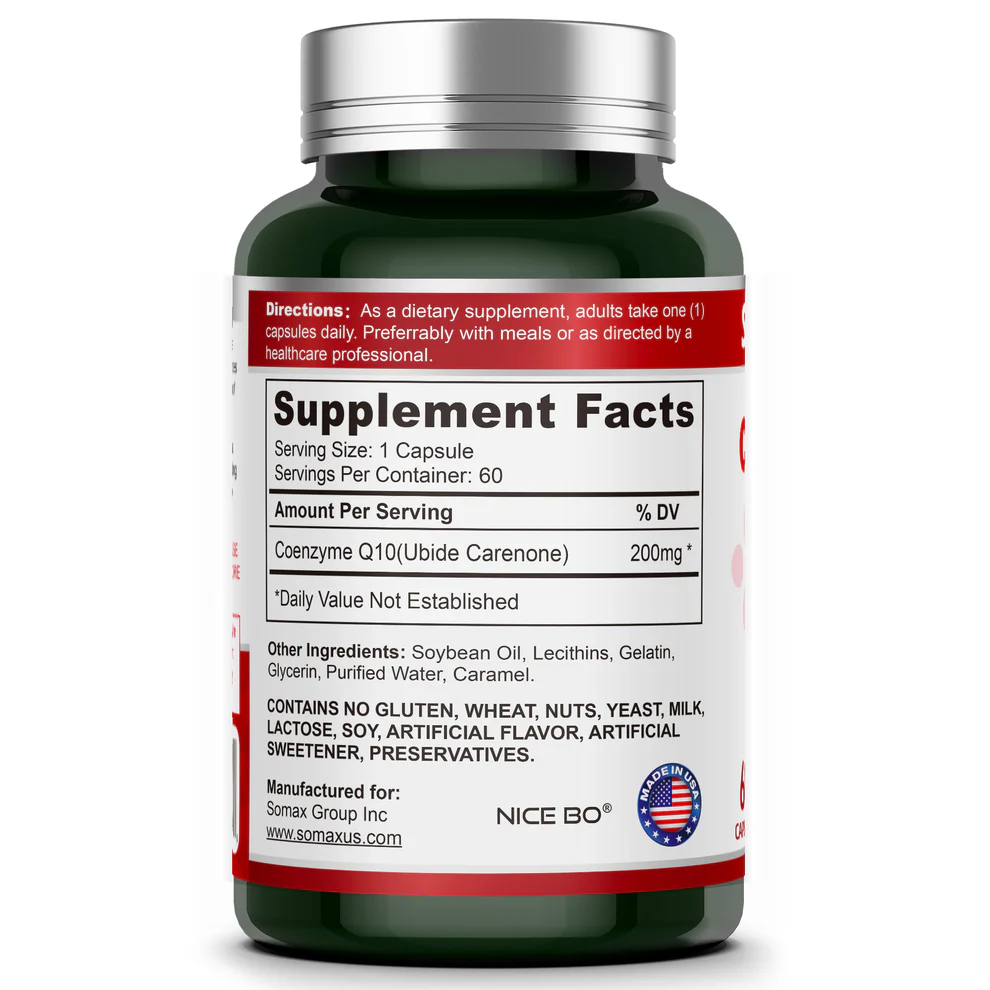
PureNutraHubs' Somax Coenzyme Q10 Complex features a scientifically proportioned formula paired with multiple synergistic nutrients, manufactured in a U.S. GMP-certified facility. The formula addresses both CoQ10's energy support and antioxidant protection needs, providing a trustworthy daily nutritional solution for those concerned about heart health. View Product Details →
10. Safety & Precautions
CoQ10's safety record among nutritional supplements is exemplary. Extensive clinical trials have confirmed that daily doses in the 100-600mg range demonstrate excellent tolerability, with no serious adverse effects observed in long-term use (over two years). The most common minor side effects include gastrointestinal discomfort (mitigated by taking with meals) and occasional insomnia (resolved by avoiding large evening doses).
⚠ Special Considerations
Taking anticoagulant medications (e.g., Warfarin): CoQ10's chemical structure is similar to Vitamin K and may affect anticoagulant efficacy — use only under physician supervision.
Upcoming surgery: It's recommended to stop CoQ10 supplementation 2 weeks before surgery to avoid potential effects on coagulation mechanisms.
Pregnancy and breastfeeding: While there are no specific safety warnings, limited research in these populations warrants consulting a healthcare professional first.
This article is for educational purposes only and does not constitute medical advice. Please tailor your personal supplementation plan to your individual health status and consult a physician or registered dietitian when necessary.
"CoQ10 is one of the few nutrients with both solid biochemical mechanisms and high-quality clinical evidence supporting its cardiovascular benefits. For heart failure patients and statin users, CoQ10 supplementation is shifting from 'optional' to 'recommended.'" — Dr. Svend Aage Mortensen, Q-SYMBIO Trial Principal Investigator
Conclusion: Protecting Your Heart Starts with Understanding CoQ10
Coenzyme Q10 isn't a trendy new "influencer ingredient" — it's a classic nutrient validated by over half a century of scientific research. From cell biology to large-scale clinical trials, from mitochondrial energy synthesis to multi-dimensional cardiovascular protection, CoQ10's value has been repeatedly confirmed.
Your heart is the hardest-working organ in your body — it never takes a day off, never stops. Providing it with adequate CoQ10 support is the best way to reciprocate its tireless service. Whether you're starting at 30 with prevention in mind, or facing the challenges of statin therapy after 50, understanding CoQ10 and supplementing it scientifically is a crucial piece of the cardiovascular health management puzzle.
📌 Key Takeaways
- CoQ10 is the irreplaceable electron shuttle in the mitochondrial electron transport chain, directly determining ATP synthesis efficiency
- The heart has the highest CoQ10 concentration of any organ, with mitochondria occupying 35-40% of cell volume
- CoQ10 synthesis capacity begins declining from the mid-20s; by 40, cardiac levels have dropped to about 68% of peak
- Statin medications can reduce CoQ10 levels by 20-50%; supplementing CoQ10 can alleviate statin-associated myalgia
- The Q-SYMBIO trial demonstrated CoQ10 reduces MACE risk by 43% and all-cause mortality by 42% in heart failure patients
- Ubiquinol accounts for 90-95% of CoQ10 in the body and is the recommended form for those over 40
- CoQ10 offers antioxidant, anti-inflammatory, and mitochondrial protection — comprehensive cardiovascular health guardianship
📚 References
- Mortensen, S.A. et al. "The effect of coenzyme Q10 on morbidity and mortality in chronic heart failure: results from Q-SYMBIO." JACC: Heart Failure, 2(6), 641-649, 2014.
- Rosenfeldt, F.L. et al. "Coenzyme Q10 in the treatment of hypertension: a meta-analysis of the clinical trials." Journal of Human Hypertension, 21(4), 297-306, 2007.
- Littarru, G.P. & Tiano, L. "Bioenergetic and antioxidant properties of coenzyme Q10: recent developments." Molecular Biotechnology, 37(1), 31-37, 2007.
- Langsjoen, P.H. & Langsjoen, A.M. "Supplemental ubiquinol in patients with advanced congestive heart failure." BioFactors, 32(1-4), 119-128, 2008.
- Caso, G. et al. "Effect of coenzyme Q10 on myopathic symptoms in patients treated with statins." American Journal of Cardiology, 99(10), 1409-1412, 2007.
- Fan, L. et al. "Effects of coenzyme Q10 supplementation on inflammatory markers: a systematic review and meta-analysis." Pharmacological Research, 119, 128-136, 2017.
- Miles, M.V. et al. "Age-related changes in plasma coenzyme Q10 concentrations and redox state in apparently healthy children and adults." Clinica Chimica Acta, 347(1-2), 139-144, 2004.
- Alehagen, U. et al. "Cardiovascular mortality and N-terminal-proBNP reduced after combined selenium and coenzyme Q10 supplementation." International Journal of Cardiology, 167(5), 1860-1866, 2013.