Sound familiar? You enthusiastically buy a collection of supplements, take them religiously for the first few days, then a month later the bottles get pushed to the back of the cabinet collecting dust, and three months later you throw them away expired, thinking "I'm just not a supplement person." The problem isn't your lack of discipline, nor are the products ineffective — the real issue is that you've been treating nutritional supplementation as a "task" requiring deliberate effort, rather than a "habit" woven into your life.

When nutritional supplementation becomes part of your morning ritual, you no longer need reminders — it becomes as natural as brushing your teeth
1. Habit Stacking: The Science of Making Supplements "Invisible"
James Clear, in his bestseller Atomic Habits, introduced a core strategy for behavior change — Habit Stacking. The essence is simple: don't try to create a new habit from scratch; instead, "attach" it to something you already do.
The formula: "After I [CURRENT HABIT], I will [NEW HABIT]."
Why is this method particularly effective for nutritional supplementation? Because the brain's neural pathways work like rivers — water always flows along existing channels rather than carving new ones. When you graft "taking supplements" onto deeply rooted behaviors like "drinking your morning glass of water," "eating lunch," or "brushing your teeth," the new habit hitches a ride on the old one, requiring virtually zero additional willpower.
✅ Habit Stacking Formulas in Action
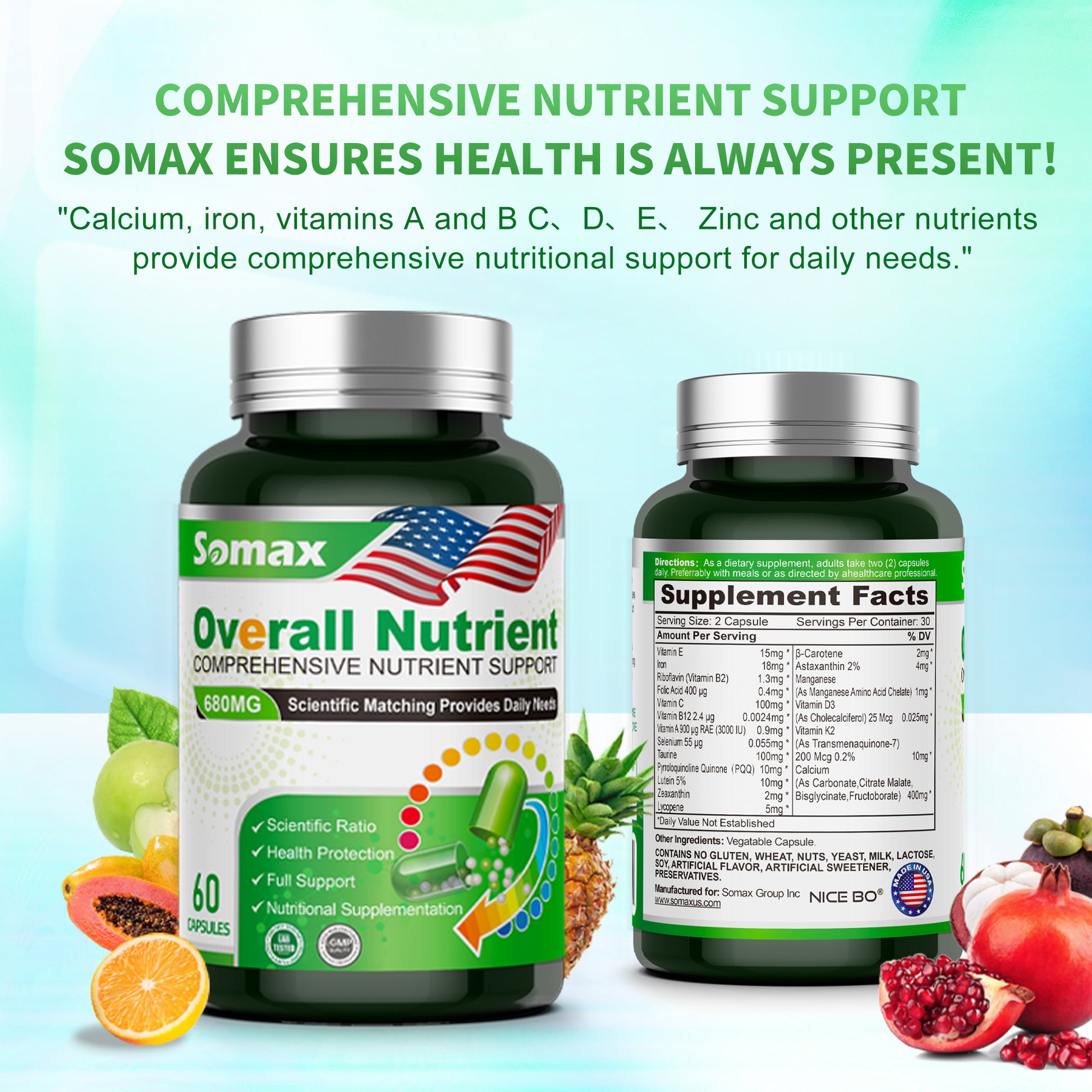
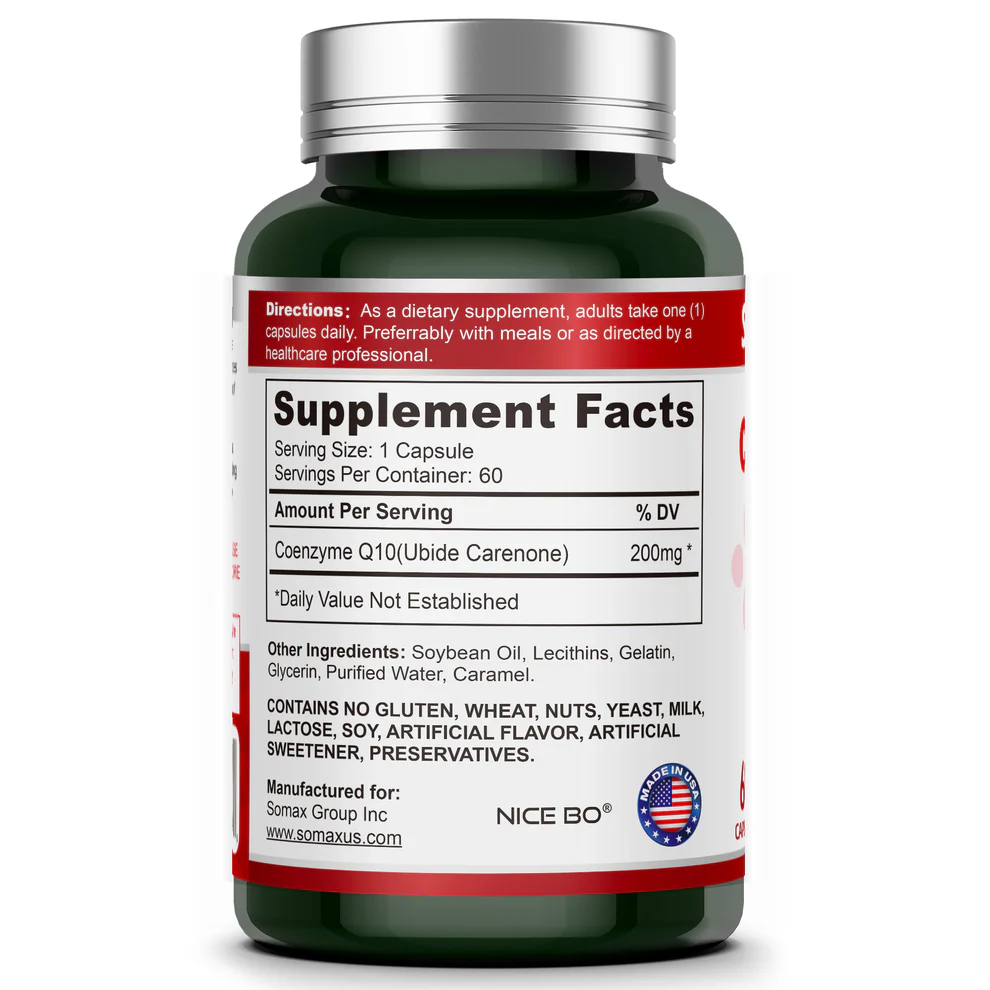
Morning: "After I pour my first glass of water, I will take out my Somax Overall Nutrient and CoQ10, and take them with breakfast."
Midday: "After I finish lunch and set down my utensils, I will drink a glass of water and take my water-soluble vitamins."
Bedtime: "After I put down my phone and prepare for sleep, I will take my magnesium supplement."
Clear emphasizes that the key to habit formation isn't how much you do each time, but consistency. Rather than ambitiously taking six supplements on day one only to quit by day three, start with the simplest step — like one multivitamin with breakfast — maintain it for 21 days to let the brain build a stable neural connection. Then gradually layer on a second and third supplement time point.
2. Integrating Supplements into Three Daily Anchor Points
Three natural "anchor moments" throughout the day are ideal for embedding supplement habits: morning, mealtime, and bedtime. Each corresponds to different types of nutrients, backed by clear physiological rationale.
Morning Ritual: The Golden Window for Fat-Soluble Nutrients
Morning is the body's transition from "repair mode" to "activity mode," and the optimal time for fat-soluble nutrient absorption. Vitamins D3, A, E, and CoQ10 are all fat-soluble, requiring dietary fat to be effectively absorbed by the small intestine. Research shows CoQ10 absorption increases by 300% when taken with a fat-containing meal.
Start with a glass of warm water
Awakens the digestive system and prepares it for nutrient absorption. This is also your first anchor point for "binding" a supplement reminder.
Prepare breakfast with healthy fats
An avocado, a drizzle of olive oil on a salad, or a handful of nuts provide sufficient fat as a delivery medium.
Take fat-soluble nutrients with your meal
Multivitamin, CoQ10, Vitamin D3 — entering the digestive tract alongside food maximizes absorption efficiency.
Lunch Window: Water-Soluble Vitamins & Energy Support
B vitamins and Vitamin C are classic water-soluble nutrients that don't need dietary fat for absorption. However, B vitamins have mild energizing effects, promoting energy metabolism and focus, making them better suited for daytime rather than bedtime. After lunch is ideal — food buffers prevent stomach discomfort, while providing energy support for the afternoon ahead.
📚 Midday Supplement Tip
If you regularly experience the "3 PM slump" — that cliff-edge energy drop with scattered concentration in the afternoon — it may be related to insufficient B vitamins. Taking a B-complex after lunch with a glass of water can help you navigate the afternoon work hours more smoothly.
Bedtime: Minerals & Recovery Support
Magnesium, Calcium, and Zinc are best taken in the evening. Magnesium ions activate the parasympathetic nervous system, helping the body shift from "fight or flight" to "rest and repair" mode. Multiple clinical trials confirm that bedtime magnesium supplementation significantly improves both time-to-sleep and sleep depth. Calcium participates in melatonin synthesis, while Zinc provides raw materials for the immune system and protein synthesis during nighttime repair.
Integrating mineral supplementation into your bedtime relaxation ritual lets your body enter repair mode under optimal conditions
3. Personalized Plans for Four Lifestyle Types
No single plan fits everyone. Truly effective nutrition management must match your actual daily rhythm. Here are customized recommendations for four typical lifestyles:
| Lifestyle Type | Core Challenges | Priority Nutrients | Habit Stacking Strategy |
|---|---|---|---|
| Office Worker | Sedentary, screen blue light, high stress, rushed lunches | B vitamins, Lutein, CoQ10, Magnesium | Anchor to "before opening laptop" and "after closing laptop" |
| Work-from-Home | Low sun exposure, low activity, flexible meal times | Vitamin D3, Multivitamin, Calcium | Anchor to "brewing coffee/tea" ritual, place supplements next to tea setup |
| Fitness Enthusiast | High expenditure, electrolyte loss, muscle recovery needs | Magnesium, Zinc, CoQ10, Multivitamin | Anchor to "post-workout hydration," place supplements next to water bottle |
| Frequent Traveler | Jet lag, irregular meals, increased immune pressure | Vitamin C, Zinc, Multivitamin, Liver Protection | Use portable pill case, anchor to "phone-wallet-keys check before leaving" |
🛠 Office Worker Plan Details
For those facing 8+ hours of screens daily, Somax Eye Protection Lutein and CoQ10 Complex are the highest-priority functional supplements. Lutein forms a natural "blue light filter" at the retinal macula, while CoQ10 provides cellular-level energy support for prolonged, intensive cognitive work. Bundle them with breakfast to create a fixed morning supplement routine.
🏋 Fitness Enthusiast Plan Details
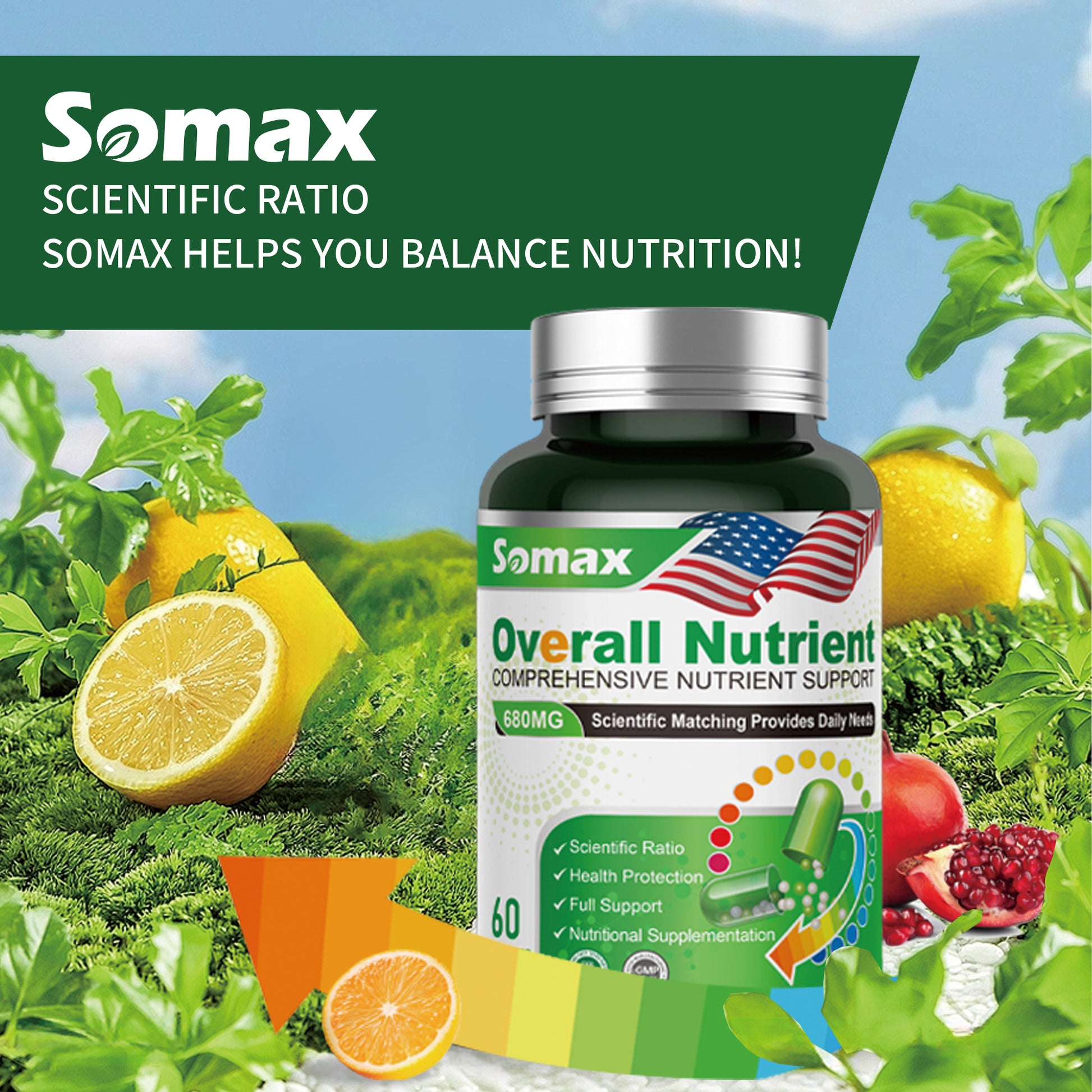
High-intensity exercise causes significant loss of Magnesium, Zinc, and other minerals through sweat, while generating 10-20x more free radicals than at rest. The 30 minutes post-workout is the "nutrition window" — taking Somax Overall Nutrient with protein during this window replenishes lost trace elements while supporting muscle recovery.
4. Daily Nutrition Timeline: What to Take Morning, Noon, and Night
Here's all the theory above consolidated into one clear action plan. This isn't a rigid prescription, but an optimal framework based on nutrient absorption characteristics — adjust specific times to fit your personal rhythm.
Breakfast (7:00-9:00 AM)
Multivitamin — Covers your daily micronutrient baseline
CoQ10 — Absorbed with dietary fats, fueling cellular energy all day
Vitamin D3 — Fat-soluble, breakfast is the optimal absorption window
Why: Fat-soluble nutrients must be paired with dietary fats; breakfast provides ample digestion time
After Lunch (12:00-1:00 PM)
B Vitamins — Boost energy metabolism and afternoon focus
Vitamin C — Water-soluble, enhances iron absorption alongside B vitamins
Lutein — A "recharge" before continued afternoon screen use for office workers
Why: Water-soluble nutrients don't require fats; B vitamins' mild stimulating effect suits daytime use
Dinner / Bedtime (7:00-10:00 PM)
Magnesium — Activates parasympathetic nervous system for relaxation and sleep
Calcium — Supports melatonin synthesis and bone repair
Zinc — Raw material for nighttime immune repair and protein synthesis
Why: Minerals absorb better in a relaxed state; Magnesium and Calcium promote sleep quality
💡 Timeline Execution Tips
You don't need to implement the full timeline from day one. Following the Habit Stacking principle, start with just the breakfast time point, stabilize it for two weeks, then add the midday slot, and two weeks later add the bedtime slot. This gradual approach has a success rate over 3x higher than "doing everything at once" (based on behavioral psychology research).
5. Diet + Supplements: Synergy That Enhances, Not Replaces
A core principle worth repeating: nutritional supplements are dietary "enhancers," not replacements. Even the best supplements cannot substitute the dietary fiber, phytochemicals, and natural nutrient matrices that a balanced diet provides. Conversely, diet alone in today's modern environment rarely covers all micronutrient needs — this is precisely where the "diet + supplementation" synergy strategy proves its value.
A breakfast containing healthy fats and protein is the ideal companion for maximizing fat-soluble nutrient absorption
Specifically, the following food-supplement pairings create 1+1>2 effects:
- Salmon/Flaxseed + Multivitamin — Omega-3 fatty acids in food help absorb fat-soluble vitamins (D, E, K), while Zinc and Selenium in the multivitamin enhance Omega-3's anti-inflammatory effects
- Dark Green Vegetables + Vitamin C Supplement — Non-heme iron (plant iron) in vegetables has low absorption; Vitamin C can increase its absorption by 3-6x
- Fermented Foods + Mineral Supplements — Probiotics in yogurt, kimchi and other fermented foods improve gut environment, increasing absorption efficiency of minerals (Calcium, Magnesium, Zinc)
- Eggs/Nuts + CoQ10 — Natural fats in egg yolks and nuts provide absorption medium for CoQ10, while egg yolks themselves contain small amounts of CoQ10, creating a stacking effect
- Colorful Fruits + Lutein Supplement — Anthocyanins and Vitamin C in blueberries, oranges synergize with Lutein to protect the retina — a "full-spectrum" eye care approach
6. Social Health Management: The Power of Supplementing as a Family
Behavioral science research shows that the strongest catalyst for healthy habits isn't willpower — it's social environment. When the people around you are doing the same thing, it transforms from a "discipline challenge" into a "social default behavior." Turning nutritional supplementation into a family ritual dramatically improves both consistency and effectiveness.
Family Supplement Station
Set up a dedicated "nutrition corner" on your kitchen counter or dining table with everyone's supplements neatly arranged together. Visual cues are more effective than phone alarms
Breakfast Check-In Ritual
The whole family takes their respective nutrients together at breakfast, reminding and supporting each other — making "taking supplements" as natural as "eating together"
Monthly Family Health Chat
Spend 15 minutes each month as a family discussing changes you've noticed. Sharing positive feedback (better energy, improved sleep) creates a virtuous cycle
"If you want to go fast, go alone. If you want to go far, go together. Health management works the same way — when nutritional supplementation becomes a shared family lifestyle, it stops being a burden and becomes a bond that connects everyone." — Extending the core philosophy of Atomic Habits
In practice, different family members have different nutritional priorities. Somax Overall Nutrient serves as the "foundation layer" suitable for the whole family, while CoQ10 focuses more on parents' cardiovascular and energy support, and Eye Protection Lutein is essential for students and office workers. PureNutraHubs' product line covers the core needs of every age group in the family, making "supplementing together" a practically achievable plan.

Health isn't a solo journey — it's a lifestyle the whole family shares
7. Tracking & Evaluating Results: The 3-Month Cycle Method
Many people give up after two weeks of supplementation feeling "nothing's changed." But nutritional supplementation isn't a painkiller — it works by gradually repairing and optimizing at the cellular level, which takes time. The scientific consensus is that 90 days (3 months) is the minimum effective evaluation period for nutritional supplementation, since most tissues and cells have renewal cycles of 60-120 days.
Month 1: Establish Your Baseline
Before starting, record your current status: daily energy level (1-10 scale), sleep quality, skin condition, exercise recovery time, emotional stability. These become your "zero point" for future comparison. Focus on building the supplement habit itself — don't rush for results.
Month 2: Observe Micro-Changes
Most people start noticing initial changes around weeks 4-6: more morning energy, reduced afternoon fatigue, falling asleep faster. These are early signals of improved cellular nutrition status. Continue recording and compare against your Month 1 baseline.
Month 3: Comprehensive Evaluation
Conduct a full comparison: Has your energy score improved? Has sleep gotten better? Any positive changes in skin/hair/nails? Has the frequency of colds decreased? If possible, get blood work to compare changes in key markers like Vitamin D, B12, and ferritin levels.
📋 Simple Self-Assessment Template
Spend 2 minutes each week scoring these five dimensions (1-10 scale), then compare trends after 90 days:
➊ Energy Level — Do you need coffee to stay alert? Afternoon drowsiness?
➋ Sleep Quality — Time to fall asleep, night waking frequency, morning alertness
➌ Emotional Stability — Prone to anxiety, irritability, or scattered attention?
➍ External Appearance — Skin radiance, hair strength, nail growth
➎ Recovery Capacity — Post-exercise recovery time, frequency and duration of colds
8. Common Reasons for Quitting & How to Overcome Them
Understanding "why people quit" is more important than "how to persist." Here are the five most common reasons people abandon their supplement routines, with corresponding solutions:
❌ Reason 1: "I don't feel anything, so it probably doesn't work"
Truth: Supplement effects are gradual, not immediately noticeable like caffeine. Many critical changes (bone density maintenance, cardiovascular protection, immune strengthening) happen "below the surface."
Solution: Use the 3-month evaluation method above, tracking changes through quantified scoring rather than subjective feelings. Looking back at the data, the improvements are often remarkably significant.
❌ Reason 2: "I keep forgetting to take them"
Truth: This is a habit design problem, not a memory problem. If you need to "remember" to take supplements, they haven't been successfully grafted onto your existing daily workflow.
Solution: Apply Habit Stacking — place supplements somewhere you'll definitely see and touch every day (next to coffee maker, next to toothbrush, in your lunch bag). Let "seeing" trigger "doing."
❌ Reason 3: "Too many pills — swallowing a handful is annoying"
Truth: If you need to take 6-8 individual supplements daily, anyone would get frustrated. This is precisely why comprehensive formula products are more sustainable than piling up singles.
Solution: Prioritize high-potency comprehensive formulas like Somax Overall Nutrient 680mg — one capsule covers multiple essential daily nutrients, simplifying "a handful" down to "one or two."
❌ Reason 4: "Travel interrupted my routine, and I never restarted"
Truth: The "restart cost" after a habit break is high — the brain generates "well, it's already broken" quit psychology.
Solution: Prepare a travel pill case and pre-portion a week's supply. Even partial compliance while traveling (just bringing the multivitamin) is far better than a complete break. The key to habits is "don't break the chain" — even if you can only manage the bare minimum.
❌ Reason 5: "My family thinks it's unnecessary — no support"
Truth: Social environment has far more influence on habit maintenance than personal willpower. If family members are skeptical, your persistence cost skyrockets.
Solution: Don't try to "convince" family — instead, "demonstrate" through your own changes. When they observe your improved energy, better sleep, and enhanced appearance, skepticism naturally transforms into curiosity. That's the moment to invite them to join — with far less effort.
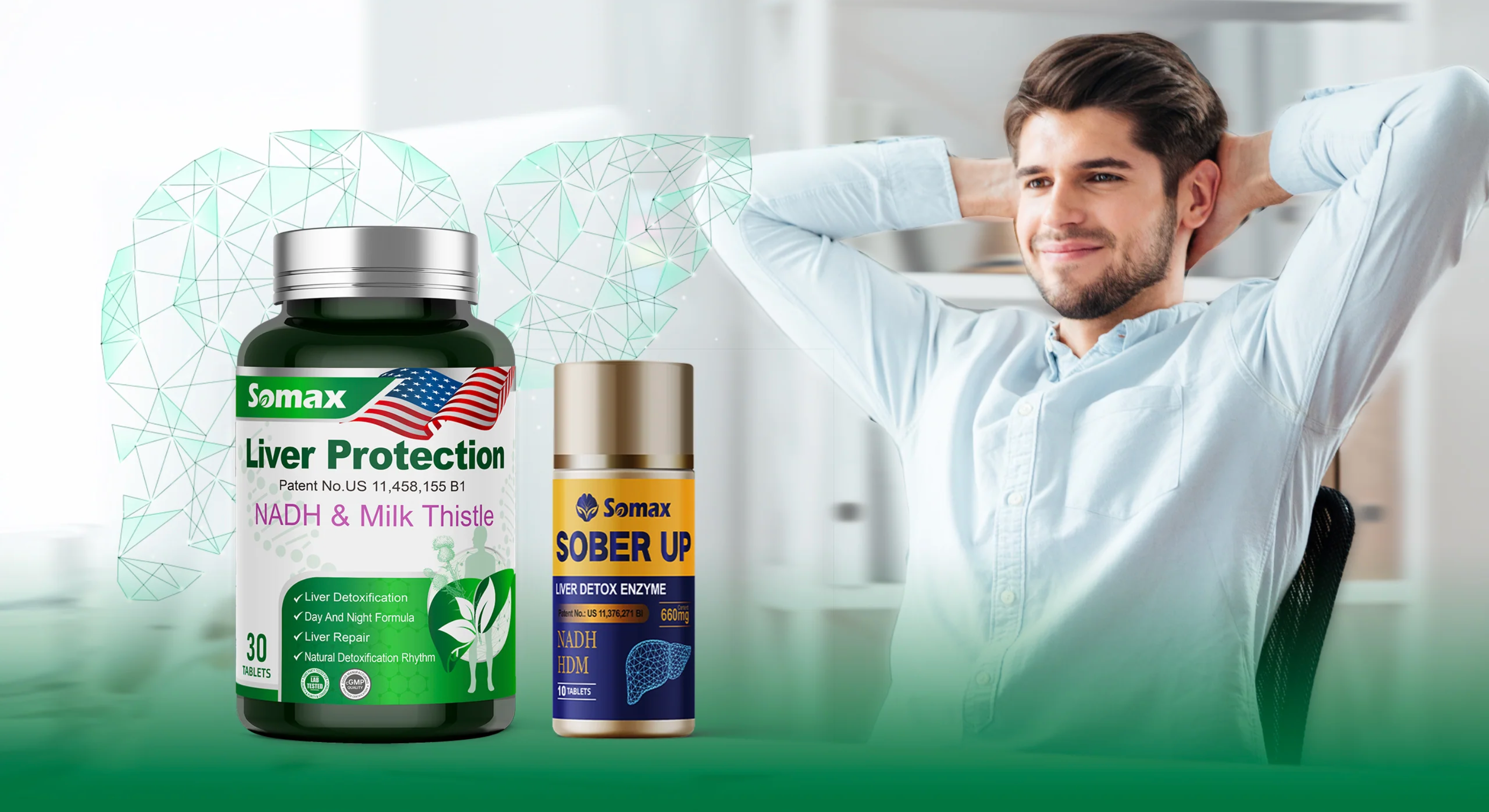
When nutritional supplementation becomes habitual, you'll have more energy to embrace an active lifestyle
9. From "Persisting" to "Enjoying": The Ultimate Mindset Shift
After successfully completing a 3-month evaluation cycle, you'll notice a fascinating mindset shift: supplementation transforms from "something I should do" to "something I want to do." Just as regular exercisers don't need to "force" themselves to run — your body has genuinely experienced positive changes, and your brain begins actively craving this state.
This is what James Clear calls "identity shift" — you're no longer "someone trying to stick with supplements" but have become "someone who values nutrition management." This identity-level change is the underlying engine that keeps a habit going for life.
| Phase | Mindset | Duration | Key Strategy |
|---|---|---|---|
| Launch | "Let me try this" — Novelty-driven | 1-2 weeks | Lower the bar, start with one capsule, bind to existing habits |
| Adjustment | "Kind of a hassle" — Novelty fading | 3-6 weeks | Environmental design (visual cues), family participation, data tracking |
| Reinforcement | "I think I feel different" — Positive feedback emerging | 7-12 weeks | Compare baseline data, acknowledge progress, gradually expand plan |
| Internalization | "This is just who I am" — Identity formed | 12+ weeks | Maintain naturally, occasionally optimize plan, inspire others by sharing |
"Every action you take is a vote for the type of person you wish to become. Taking a nutrient capsule with breakfast each morning is casting a vote: 'I am someone who takes health seriously.'" — James Clear, Atomic Habits
Conclusion: Health Isn't a Destination — It's a Journey
The transformation from "taking supplements" to "living a healthy lifestyle" isn't about how many supplements you take — it's about building a sustainable nutrition management system that naturally integrates with your life's rhythm. Habit Stacking eliminates the need for willpower, personalized plans ensure you're supplementing what you actually need, dietary synergy maximizes every capsule's value, family participation makes consistency effortless, and 3-month evaluations let you see real change.
PureNutraHubs' Somax product line is designed around this "integrate into life" philosophy — from one capsule covering foundational needs to scenario-specific CoQ10, Lutein, and Liver Protection, each product helps you achieve comprehensive nutritional coverage in the simplest way possible.
Starting today, don't aim for perfection — just reach for that one nutrient capsule with tomorrow's breakfast. In 21 days, you'll find it's become part of your morning. In 90 days, you'll be grateful you took this first step.
📌 Key Takeaways
- Habit Stacking is the most effective method for sustainable supplementation — bind new behaviors to existing daily routines
- Three daily time slots match specific nutrients: breakfast (fat-soluble), post-lunch (water-soluble), bedtime (minerals)
- Office workers, homebodies, fitness enthusiasts, and travelers each need different personalized plans
- Diet and supplements are "enhancing" partners, not "replacing" ones — synergistic pairings multiply effectiveness
- Family participation significantly improves supplement habit consistency
- 3 months is the minimum effective evaluation period — use quantified self-assessment to track changes
- The key to going from "forcing it" to "naturally doing it" is an identity shift at the core
📚 References
- Clear, James. "Atomic Habits: An Easy & Proven Way to Build Good Habits & Break Bad Ones." Avery, 2018.
- Lally, P. et al. "How are habits formed: Modelling habit formation in the real world." European Journal of Social Psychology, 40(6), 998-1009, 2010.
- Nielsen, F.H. et al. "Magnesium supplementation improves indicators of low magnesium status and inflammatory stress in adults older than 51 years." Magnesium Research, 23(4), 158-168, 2010.
- Abbasi, B. et al. "The effect of magnesium supplementation on primary insomnia in elderly: A double-blind placebo-controlled clinical trial." Journal of Research in Medical Sciences, 17(12), 1161-1169, 2012.
- Christakis, N.A. & Fowler, J.H. "The spread of obesity in a large social network over 32 years." New England Journal of Medicine, 357(4), 370-379, 2007.